
Swirl, Sip, Shrug: Enjoying a Wine Tasting Without Faking It
You do not need the fancy vocabulary to love a wine tasting abroad, only some curiosity and a willingness to say what you taste.

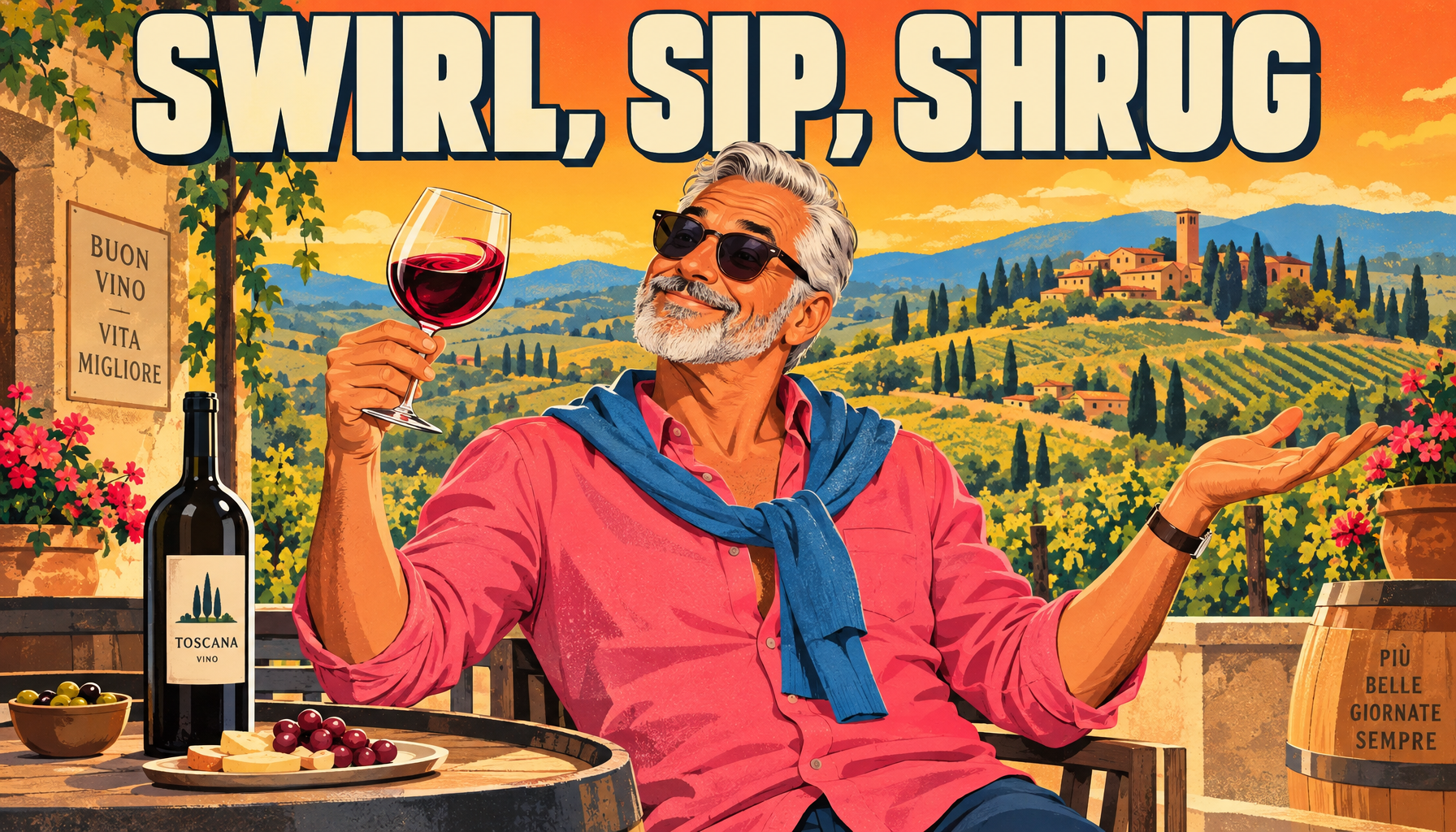
The winemaker pours an inch of something pale into your glass and waits. Around the table, people begin to swirl with great seriousness. A man to your left says "flinty" with the confidence of someone who has never licked a flint. You sip, and what you taste, if you are being truthful, is wine.
Good. That is the correct answer, and it is a fine place to start.
Nobody Is Grading You
A wine tasting on a trip is one of the great pleasures of grown-up travel, and also one of the most quietly stressful. There is a whole vocabulary to it, plus the nagging sense that everyone else read the manual. Most of them did not. They are performing, and performing is exhausting.
The person pouring for you has seen every kind of guest. Nervous first-timers, retired sommeliers in disguise, couples who mostly came for the cheese plate. The one they remember fondly is the guest who was curious. Curiosity costs nothing and makes you instantly good company.
So drop the act. You came to learn something and enjoy an afternoon, and no one at that table is keeping score.
The Few Moves Worth Knowing
There is a little technique to it, and it is worth having in your pocket because it makes the wine taste better, which is the whole point. Here is the short version.
- Hold the glass by the stem. Your hand warms the wine and smudges the bowl. It also looks like you have done this before, which is a nice bonus.
- Swirl gently. A few turns on the table lets air in and lifts the aromas. Vigorous swirling mostly decorates your neighbor.
- Smell before you sip. A good deal of what we call taste happens in the nose. Take a real sniff and see what comes to mind, however unpoetic.
- Let it sit in your mouth a moment. Then notice what lingers after you swallow. That aftertaste is often where a wine shows its manners.
- Use the spit bucket if you like. It is there on purpose. Professionals use it all day, and it means you will still enjoy dinner.
That really is all you need. Everything else is garnish.
Say What You Actually Taste
Here is the secret the flinty gentleman will never tell you. The best tasting notes are plain ones. "This reminds me of the jam my aunt made" is more useful than any word borrowed from a back label, because it is true and it is yours.
Try describing wine in your own terms. Is it light or heavy in the mouth? Does it make your cheeks pucker a bit? Does it taste of fruit, or something earthier, like a walk through damp leaves? Would you want it with fish or with a stew?
You will be surprised how quickly your palate sharpens once you stop trying to sound clever. And when you do not like a wine, say so kindly. "Not for me, but I can see why someone would love it" is perfectly gracious and frequently starts the best conversation of the day.
The only wrong answer at a tasting is the one you borrowed from someone else.
Ask the Person Holding the Bottle
On a river cruise or a culinary trip, tastings tend to happen where the wine is made. That is a gift. The person pouring may well be the one who picked the grapes, and they have stories that never make it onto a label.
Ask them about it. What was the weather like the year this was made? What do they drink with dinner at home? Which wine on the list are they proudest of, and which one do visitors usually overlook? These questions get you better answers than "what are the tasting notes," and they turn a pour into an encounter.
You will also learn more about a place from twenty minutes with its winemaker than from an hour of guidebook. Wine is farming and family history in a bottle, with a fair amount of stubbornness mixed in, and most growers are delighted to talk about it.
Pace Yourself, Then Enjoy Yourself
Small pours add up with alarming efficiency, especially on an afternoon with two or three stops. Eat the bread they set out. Drink the water. Skip a pour now and then without apology, because a gracious host will never be offended.
And if you find a bottle you love, buy one to drink on the trip rather than haul home. A wine tastes best near the hill it came from, opened on a terrace with the people who were there when you first tried it. Carried home in a sock, it tends to lose something on the way.
Three Ring Travel travels for exactly these afternoons, in good company and with someone else doing the driving. If that sounds like your sort of trip, have a look at Three Ring Travel and see where we are pouring next.
Photo by Tim Mossholder on Unsplash